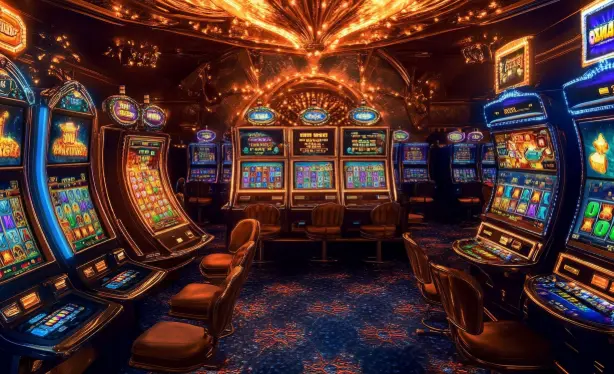
Scent Diffusion Casino: Why Does It Keep You Playing?
Piped-in fragrance is not ambiance — it is a behavioral lever, and the floor operators know exactly where the pressure point sits. Walk onto any serious gaming floor and the first thing that hits you is not the carpet or the chandeliers. It is the air. That engineered olfactory layer is doing quiet, ruthless work on your decision loop, and if you think you are immune, you are already the target. 🎰
The Neurology of the Scent Layer
Olfactory signals route through the limbic system before they ever reach conscious processing. That means a carefully tuned scent profile can nudge arousal, lower perceived time-on-task friction, and blunt the sting of a losing streak — all before your prefrontal cortex gets a vote. The scent diffusion casino model exploits this hard. Operators are not spraying perfume to make the room pleasant; they are engineering a chemical context that makes the next spin feel cheaper than it actually is. The scent diffusion casino setup is a timing device disguised as hospitality.

Diffusion Hardware and the Delivery Problem
Here is where the hardware nerds separate from the marketing brochures. Cold-air nebulizers and HVAC-injected dry vapor systems are the two dominant delivery architectures, and they behave nothing alike. Nebulizers give you sharp bursts tied to zone sensors — high-traffic pit areas get a heavier pulse during peak hours, and the concentration curve tracks the drop in player counts. HVAC injection gives you a flat, room-wide baseline that is nearly impossible to detect because it never spikes. The good floors run a hybrid: a flat base layer plus targeted micro-bursts. The tell is the smell gradient — if the fragrance gets noticeably stronger as you approach the cashier cage or the high-limit slots, you are looking at sensor-driven burst delivery, not a static diffuser. 🧪
Why You Stay: The Retention Mechanism
Here is the mechanism nobody puts on the signage. Scent does two things simultaneously to your behavior loop. First, it anchors the environment in memory — every time the same profile hits your nose, the association with the floor reactivates, which is why returning players report an almost physical pull toward the property. Second, it masks the cognitive cost of losses. A sharper, more alert olfactory context keeps arousal high enough that the tilt response — the urge to chase — arrives faster and stronger. That is the retention mechanism in plain sight: the scent is not there to relax you, it is there to keep your decision threshold low and your session length long. Operators will happily burn six figures a year on fragrance concentrate if it shaves two minutes off the average cash-out interval.

Reading the Room Like an Auditor
Do not trust your nose to tell you the truth — trust the differential. The reliable audit trick is the entrance-to-core comparison: sample the air at the door, then again twenty meters deep in the slot pit, then again near the restrooms where ventilation resets the room. A flat profile across all three points means HVAC injection with no zoning. A rising curve means targeted delivery, and targeted delivery means the floor is actively modulating you. Watch for the evening handoff too — many properties swap concentrate cartridges or bump the pulse rate between 8 p.m. and 11 p.m., right when the casual crowd converts to the committed crowd. That swap is the cleanest evidence that the fragrance schedule is written by the behavioral analytics team, not the facilities crew. 😤
Concentration, Cost, and the Disclosure Gap
Ask any floor manager about the diffusion budget and watch the deflection. Concentrate costs run anywhere from low four figures to high five figures annually depending on square footage, system type, and how aggressively the pulse schedule is tuned. The disclosure gap is the real scandal: almost no property publishes its fragrance composition, pulse timing, or zone mapping, even though that data directly shapes player decision environments. The olfactory engineering behind a modern floor is as consequential as the RTP math on the machines, and it is regulated about as thoroughly as the carpet pattern. 164 different fragrance compounds can sit in a single commercial concentrate, and the house does not owe you a list of any of them.
The Takeaway the Floor Will Not Give You
Treat the air as part of the game's variance. If you cannot smell a gradient shift when you cross the floor, you are not auditing — you are absorbing. The scent diffusion casino is not a gimmick, it is a live control channel pointed straight at your limbic system, and the only defense is knowing where the pulses fire and when the schedule flips. 57 seconds is roughly how long an untrained player takes to stop noticing the fragrance after entering — and that is precisely when the floor starts working on the decision loop.