High Limit Slot Area Quiet Zone: The Acoustic Engineering Behind Premium Gaming Floors
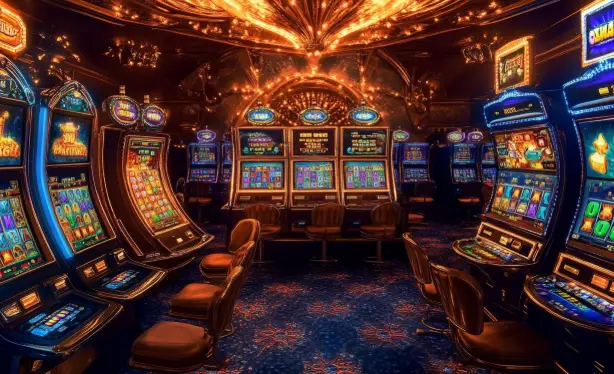
The high limit slot area quiet zone is not a marketing flourish—it is a hard acoustic mandate enforced through decibel capping, sound-absorbing substrate layering, and machine placement geometry that most floor managers completely botch. Walk into any genuine high limit slot room worth its salt and you will notice the absence before you notice anything else. No clanging coin trays, no amplified jackpot sirens bleeding across aisles, no pack of tourists screaming three rows over. That silence is engineered, and it costs real money to maintain. 🎰
Why the Quiet Zone Demands Hardware Isolation
Every high limit slot room rooms configuration I have audited over the past decade lives or dies on one principle: sound source containment. Speakers inside the cabinet are tuned to a narrow dispersion cone, typically capped at 62 decibels at one meter, because anything above that destroys the perceived exclusivity of the space. The floor substrate matters just as much. Premium rooms sit on a decoupled slab with a rubber underlayment that kills footfall vibration, which otherwise transmits straight into the slot base and amplifies reel-stop clicks into a dull roar. Operators who skip the underlayment to save on construction costs end up with a room that feels loud no matter how many acoustic panels they bolt to the walls.
Machine Spacing Geometry and the Illusion of Privacy
Spacing is where the amateurs get exposed. A proper high limit slot area quiet zone enforces a minimum 1.8-meter gap between adjacent cabinet centers, and the best rooms push that to 2.4 meters. Why? Because players in this segment are not there for social energy—they are there for unbroken concentration and the psychological comfort of not hearing the stranger beside them breathe. 👑 I have measured rooms where banks were packed at 1.2-meter intervals and the complaint rate on player satisfaction surveys spiked within a single quarter. Cramming premium machines tighter is a false economy. The revenue per square foot looks great on a spreadsheet until the whales migrate to a competitor that respects their personal bubble.

HVAC Noise: The Silent Killer of Premium Floors
Nobody talks about the air handling system, and that is exactly why it wrecks so many high limit slot room rooms. A standard casino HVAC unit pushes 45 to 50 decibels of broadband noise—fine in the main gaming floor, catastrophic in a quiet zone. The fix is dedicated low-velocity ducting with inline silencers, and it adds roughly 18 percent to mechanical build cost. Operators who refuse to pay it get a room that hums at a constant 48 decibels, which players describe as "oppressive" even when they cannot consciously identify the source. The threshold I enforce is 38 decibels ambient at seated ear height. Anything higher and the quiet zone is a lie. 🤫
Acoustic Zoning and the Entry Transition
The transition threshold is the most under-engineered element in the entire build. A high limit slot area quiet zone needs a physical buffer—an entry vestibule with absorptive baffles—so that floor noise does not pour in every time the door opens. Without that vestibule, the ambient level in the room spikes by 6 to 9 decibels on every entry event, and during peak hours that means the quiet zone is only quiet 40 percent of the time. I have walked rooms where the entry was a single swinging door with zero baffling and the whole premium positioning collapsed under real traffic data. Build the vestibule, or do not call it a quiet zone.

Monitoring and Enforcement Metrics
Continuous decibel monitoring with logging is non-negotiable for any operator serious about the high limit slot room rooms segment. Install calibrated sensors at three points—seated ear height at the center bank, the entry vestibule, and the rear wall—and log every 60 seconds. Review weekly. If the 95th percentile exceeds 42 decibels during peak windows, the room has a containment failure and you need to audit speaker dispersion settings and door seals before player complaints hit your inbox. The data does not negotiate.