
Germany Casino Floor: What Is the Minimum Bet?
The minimum bet on a German casino floor is not a courtesy threshold—it is a hard-coded operational variable that determines table velocity, house edge realization, and floor yield per square meter. Walk into Spielbank Baden-Baden or a licensed hall in North Rhine-Westphalia and you will see a EUR 1 table minimum on automated roulette terminals, EUR 2 on physical roulette outside bets, and EUR 5 on blackjack shoe games during off-peak hours. That is the mechanical baseline. Anything advertised below EUR 1 is either a promotional loss-leader or a slot-style electronic game wearing a table-game costume. 🎲
The Regulatory Floor Beneath the Floor
German state gambling treaties impose a framework where the minimum bet must be printed on the table cloth and enforced by the pit boss, not left to dealer discretion. The Glücksspielstaatsvertrag 2021 tightened operator licensing, and each Bundesland's Spielbankgesetz layers its own floor rules on top. Bavaria historically ran higher minimums than Berlin because the state monopoly operator priced entry to keep casual foot traffic out of the VIP pits. The practical spread across licensed floors sits between EUR 1 and EUR 10 for entry-level table seats, with high-limit salons starting at EUR 25. If an operator quotes you a EUR 0.50 minimum, demand to see the game type—it will be a terminal, not a felt table.
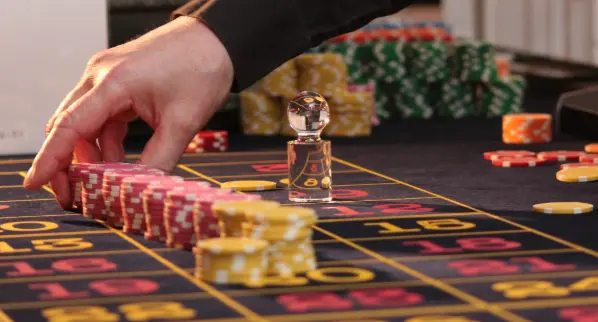
Why the Minimum Bet Is a Yield Algorithm, Not a Welcome Mat
Floor managers treat the table minimum as a throughput governor. A EUR 2 roulette minimum with a 90-spin-per-hour dealer cadence and 20 seated players generates a predictable theoretical win once you multiply average wager by house edge by decision count. Drop the minimum to EUR 1 and you flood the table with low-yield players who occupy seats, slow the cadence, and dilute the theoretical win per seat-hour. That is why smart operators segment the floor: EUR 1 terminals in the concourse, EUR 5 tables in the mid-pit, EUR 25 and up behind the velvet rope. The minimum bet is the sorting mechanism. 🎯
Electronic Terminals Distort the Real Number
Automated roulette and electronic blackjack terminals routinely post EUR 0.50 or EUR 1 minimums because the machine handles infinite player concurrency without dealer labor cost. Do not confuse these with live-dealer table minimums. The terminal's minimum wager is a software field configurable by the operator in real time—it can shift between peak and off-peak without a single printed sign change. Live tables cannot do that. If you are auditing a German casino floor for true entry cost, separate terminal minimums from felt-table minimums or your data is garbage.

What the Minimum Bet Actually Signals to Sharp Players
A low table minimum paired with a high table maximum is the signature of a floor hungry for volume and confident in its edge—or a floor making a mistake. The spread between min and max defines the table's theoretical exposure ceiling. German floors typically run EUR 2 to EUR 500 on roulette, a 250:1 spread that is aggressive but within state tolerance. When you see EUR 1 to EUR 1,000, the pit is either chasing turnover targets or the state operator is using the table as a loss-leader to feed the slot floor. Read the spread, not the minimum alone, because the minimum is the bait and the maximum is the risk statement.
The Dealer's Discretion Myth
No licensed German dealer has authority to waive or raise the posted minimum mid-shoe. The number is locked into the table's game plan filed with the state authority, and a pit boss altering it without a floor notice triggers an audit flag. If a dealer tells you the minimum is flexible, you are in an unlicensed private game, not a regulated Spielbank. That distinction matters more than the euro figure itself. 🃏