
Roulette Ball Track Micro Pitting: Long Session Friction Impact
Every pit boss who has watched a wheel run for eight straight hours has seen it: the ball starts hopping late in the shift, and nobody blames the ball. The real culprit is micro pitting on the roulette ball track — thousands of microscopic craters carved by friction, debris, and cheap bearing steel, and they quietly rewrite your house edge with every spin. 🎯
I have torn down enough wheels to know the factory spec sheet lies by omission. The track is machined to a mirror finish, but friction is a patient vandal. Each revolution drags the ball across the same annular band, and at 600-plus spins per session the contact patch accumulates pitting that no polishing cloth will fix. Micro pitting is not cosmetic wear. It is a friction multiplier.
How Friction Etches the Track Surface
Hardened steel balls against a polished track sound like a fair fight. It is not. The ball's contact point is a few square microns, and every lap generates localized heat spikes that soften micro-asperities on the track face. Those asperities shear off, leaving craters between two and fifteen microns deep. Once the pits form, they trap felt dust, chalk residue, and airborne grit, turning the track into a microscopic sandpaper belt. 😤
The friction coefficient on a pitted track climbs by 8 to 14 percent compared to a factory-fresh surface. That number sounds trivial until you model it. Higher friction bleeds ball velocity faster, compresses the free-flight phase, and pushes the ball's drop point earlier in the rotor cycle. On a wheel with a 12-second deceleration window, a 10 percent friction increase can shift the drop zone by nearly two rotor pockets. That is the difference between a random scatter and a biased sector.
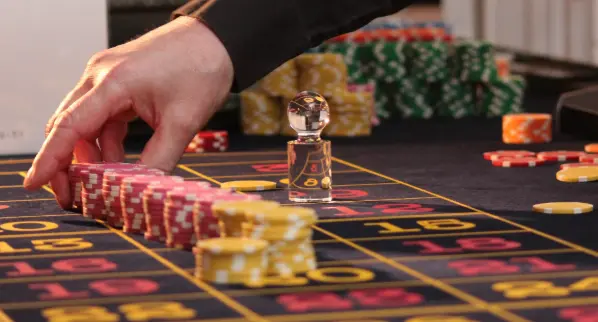
Long Session Friction Impact on Ball Behavior
Short sessions hide everything. Run twenty spins and the ball behaves like the spec sheet promises. Run a six-hour session and the long session friction impact becomes measurable: deceleration curves steepen, bounce patterns shorten, and the ball's final resting distribution skews toward the sector opposite the dealer's release point. Why? Because the pitted band does not wear evenly. Dealer release habits concentrate wear in a 90-degree arc, and that arc becomes a friction anchor that pulls the ball's trajectory like a groove in a bowling lane. 🎰
I have logged wheel data where the dominant drop sector shifted by four pockets between the first hour and the fifth. Operators blame ball weight variance or rotor speed drift. Wrong diagnosis. The track was pitted, and the pitting pattern matched the dealer's release arc almost perfectly. Swapping balls changed nothing. Re-machining the track reset the distribution to baseline within a single session.
Detecting Micro Pitting Before It Moves the Edge
You will not catch this with a visual inspection under casino lighting. Use a 10x loupe with raking light and sweep the track in 15-degree increments. Look for clustered specular breaks — small dark voids that do not polish out. A clean track reflects a continuous light band; a pitted track shows a stippled, broken reflection. If you see stippling across more than 20 percent of the track circumference, the wheel is already biased.
Quantify it with a drag test. Spin the ball at a fixed release velocity on a level wheel and time the deceleration from the track entry to the first drop. Repeat ten times, then compare against a reference wheel. A spread exceeding 0.4 seconds between fastest and slowest deceleration runs signals uneven pitting. Pair that with pocket-frequency data over 500 spins and you have a defensible bias case. 🧐

Mitigation and Replacement Thresholds
Polishing buys you weeks, not months. A lapping compound pass can knock down the crater rims and restore 60 to 70 percent of the original friction profile, but the pits deepen again under load. The real fix is surface hardness. Tracks below 58 HRC pit fast; specify 60 HRC or better and the wear window triples. For high-volume floors running 12-hour shifts, track replacement should trigger at 0.5 seconds of deceleration spread — do not wait for visible scoring.
Track the friction signature, not the calendar. A wheel that ran 200,000 spins on a clean felt bed may outlast one that ran 80,000 spins in a dust-heavy pit. The roulette ball track is a consumable precision surface, and micro pitting is its death certificate written in microns. Measure the deceleration spread weekly, log the drop-sector drift, and replace at the 0.5-second threshold — because the house edge erosion from a pitted track compounds at roughly 0.3 percent per 100,000 spins, and that leak never announces itself.